the complete guide

what is
creatine?

The most researched supplement in sports science — and still one of the most misunderstood. Here's everything you actually need to know, without the gym-bro filter.

creatine is a natural compound your body already makes — you're just topping it up.

Your body produces creatine from amino acids and stores it in your muscles. When you take a creatine supplement, you're simply increasing those stores so your muscles have more energy available when you need it. That's it. No magic. No mystery.

the science, simply put

what does creatine actually do?

Creatine helps your muscles regenerate ATP — the energy currency your cells use for effort. More creatine stored in your muscles means more energy available for the moments that count.

more energy, every rep

Creatine supports your phosphocreatine system — the energy pathway your muscles use for short, intense bursts of effort. You get more out of the same amount of work.

strength and muscle

Decades of studies consistently show that creatine supplementation combined with resistance training increases strength and lean muscle mass more than training alone.

outside the gym

Creatine is being studied for roles beyond exercise, including cognitive function and healthy ageing. While research is still in its early stages, the findings to date are encouraging.

it's not just for athletes

who is creatine for?

This is where most brands get it wrong. Creatine has been marketed almost exclusively to competitive athletes and gym regulars — but the research tells a different story.

1

active adults of any age

If you move your body regularly — gym, walks, yoga, cycling, pickleball — creatine can help you feel stronger and recover faster. You don't need to be an athlete. You just need to be active.

2

women

Most early creatine research was done on male athletes — which created a false impression that it wasn't relevant for women. It is. Research on women specifically shows benefits for strength, bone density, and cognitive function, particularly after 40.

3

adults 40 and older

As we age, we naturally lose muscle mass and cognitive sharpness. Creatine is one of the few supplements with real research backing its role in supporting both. If you're playing a long game with your health, creatine deserves serious consideration.

4

first-time supplement users

If you've never taken a supplement before, creatine is one of the safest places to start. It has more safety data behind it than almost any other supplement on the market, and the protocol couldn't be simpler: one scoop, once a day.

the honest answer

is creatine safe?

Yes — with one important qualifier. Creatine monohydrate is one of the most studied supplements in history, with a consistent safety record across decades of research in healthy adults. Here's what the evidence actually says.

concern
Does creatine damage kidneys?

This is the most common concern, and it's based on a misunderstanding. Creatine metabolism produces creatinine, which kidneys filter out — and elevated creatinine can indicate kidney problems. But in healthy people, creatine supplementation raises creatinine levels without actually stressing the kidneys. Multiple long-term studies confirm no kidney harm in healthy adults.
the evidence
Who should be cautious:

If you have an existing kidney condition, consult a healthcare practitioner before use — this is on CreaPrime's label and we take it seriously. The same applies if you're pregnant or breastfeeding. For healthy adults, the safety record is clear and consistent across studies spanning 30+ years.
concern
Does creatine cause bloating?

Creatine draws water into your muscle cells — this is part of how it works. Some people notice a small amount of water retention, particularly during a loading phase. This is intramuscular water (inside the muscle) and looks and feels different from bloating. It's not fat, and it's not the puffy water retention you might associate with sodium.
the evidence
NSF Certified for Sport:

Every batch of CreaPrime is independently tested and certified by NSF — one of the most rigorous third-party testing programs in the world. This means every ingredient is verified, and the product is tested for over 270 substances banned in sport. You know exactly what you're taking.
the whole protocol

how do you take creatine?

This is genuinely the simplest supplement protocol there is. No complicated timing windows. No multiple doses. No special instructions.

1

scoop

One scoop = one serving = 5 grams of creatine. That's your daily dose.

2

mix

Add to 250–350 ml of water, juice, or any beverage. Stir or shake for 10 seconds.

3

drink

Any time of day. Before, during, or after a workout. With coffee. Timing matters less than consistency.

4

repeat

Daily. Creatine works by staying saturated in your muscles — missing a day won't ruin it, but consistency is the goal.

Do I need to do a loading phase? No. A loading phase (20g/day for 5–7 days) saturates your muscles faster, but you'll reach the same level with 5g/day — it just takes a few extra weeks. Most people skip loading and simply start their daily habit. Use for a minimum of 4 weeks to feel the difference.
set the record straight

things people get wrong about creatine

A lot of creatine misinformation has been floating around since the 90s. Here's what's actually true.

creatine will make me bulky
Creatine doesn't add muscle on its own — it supports the energy your muscles use during effort. Any body composition changes come from your training, not creatine itself. The only thing creatine adds on its own is intramuscular water, which actually makes muscles look fuller, not bigger.
creatine is a steroid
Creatine is not a steroid, hormone, or drug. It's a naturally occurring compound found in red meat and fish, synthesised by your liver, kidneys, and pancreas. It's legal in every sport, sold over the counter, and has been studied extensively since the 1990s.
you need to cycle on and off creatine
There's no research supporting this. Cycling creatine is a gym myth — possibly borrowed from steroid protocols where cycling is relevant. Creatine monohydrate is safe for continuous daily use. Think of it more like a vitamin than a drug.
creatine only works if you're already fit
Creatine works regardless of your current fitness level. In fact, research suggests people who are newer to training or have lower baseline creatine stores (including vegetarians and vegans) often see more pronounced results.
creatine is only for men
The male-dominated history of creatine marketing doesn't reflect the science. Women benefit from creatine for strength, performance, bone density, and cognitive health. Emerging research is particularly promising for women 40 and older.
why creaprime

creatine done right.

Not all creatine is the same. Here's what makes CreaPrime different.

NSF Certified for Sport

Every batch independently tested for banned substances and ingredient accuracy. Not self-certified — externally verified.

Made in Canada

Manufactured in Hamilton, ON in a GMP-certified facility. Domestic and imported ingredients, clearly disclosed.

5000 mg per serving

The clinically studied dose. No underdosing, no proprietary blends. What you see on the label is what's in the product.

electrolytes in every flavour

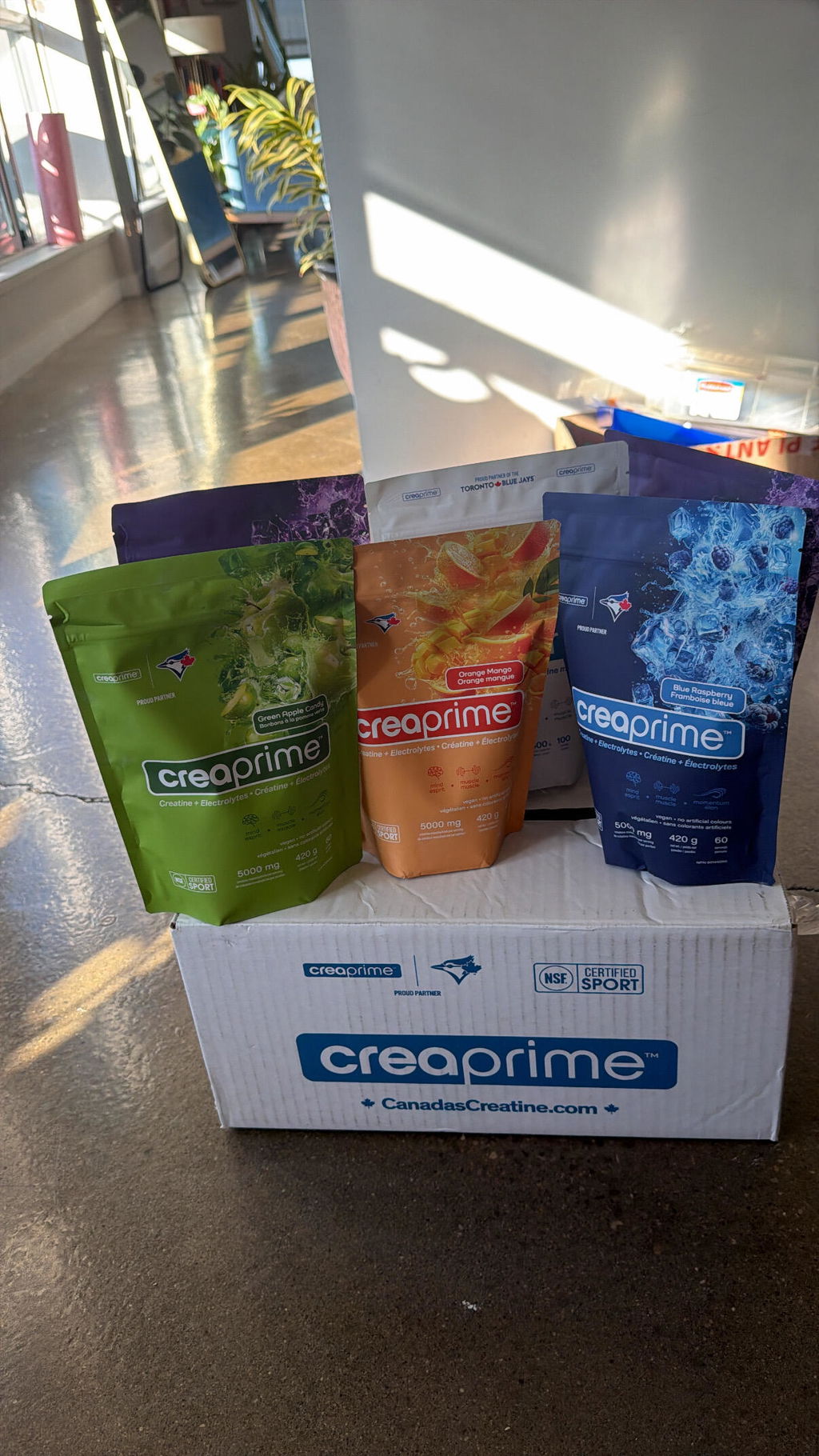
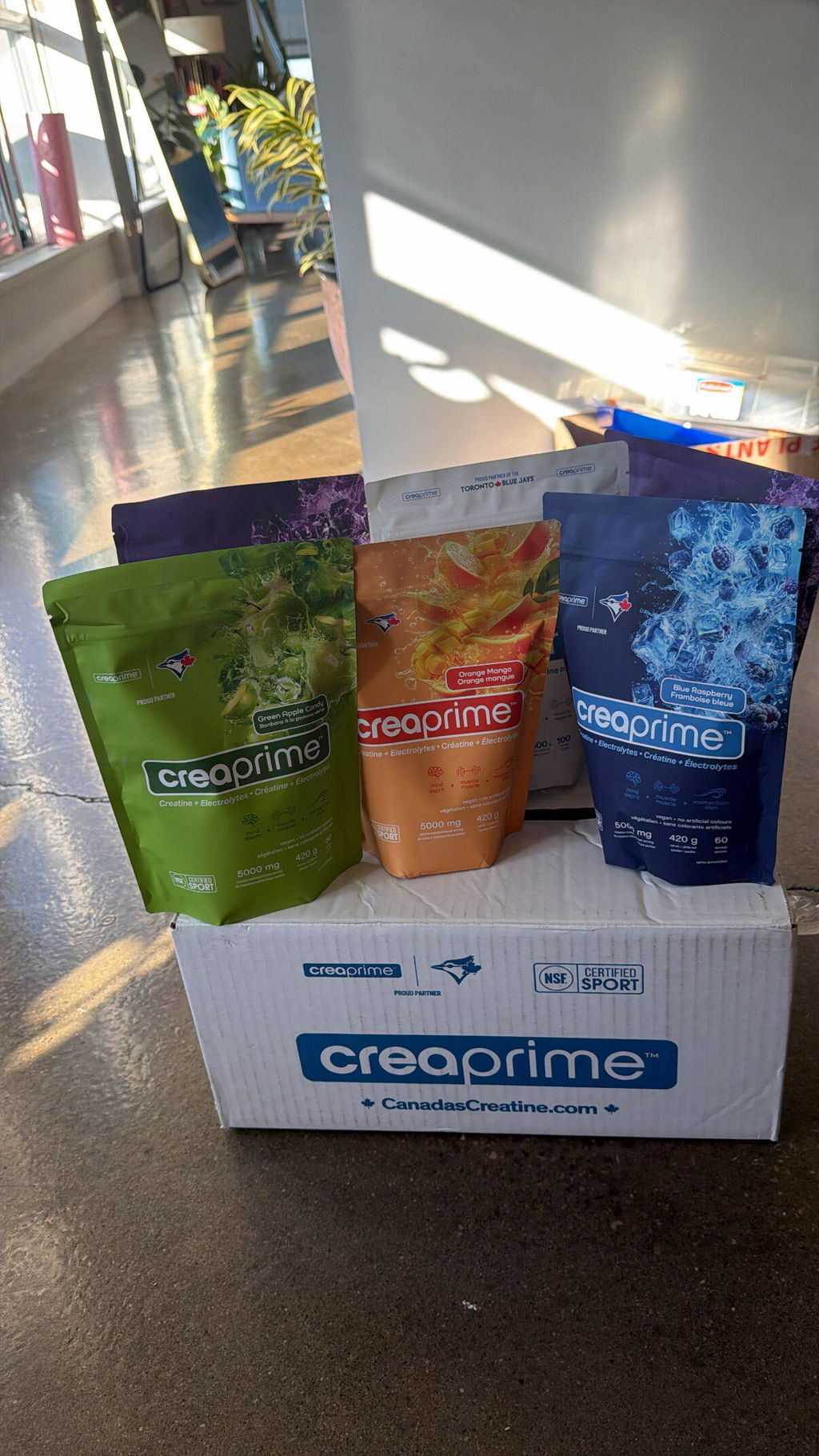
Our flavoured products include potassium, magnesium, vitamin C, calcium, and phosphorus — making your daily creatine do double duty as a hydration drink.

Toronto Blue Jays partner

Proud partner of the Toronto Blue Jays™ — a partnership built on performance, Canadian identity, and doing things the right way.

built for everyone

Vegan. No artificial colours. Sweetened with stevia. Designed to fit into real life, not just elite sport.

ready to start

pick your flavour.
start tomorrow.

One scoop. Once a day. That's the whole protocol. Available in four bold flavours or pure unflavoured creatine.